How to Talk Color Like a Pro
DESIGN
STORY BY VIRGINIA BESHEARS
Have you ever tried describing a paint color to someone and ended up saying something like, “It’s red, but like… not too red”?
Color is one of the most nuanced elements in any design, and the English language doesn’t make it easy. We have maybe a dozen everyday words for color, but color itself has dozens of distinct properties. The result is a lot of “you know what I mean” conversations that somehow end in the wrong wall paint.
The good news is that you don’t need a degree in color theory to fix this, you just need to master five concepts.
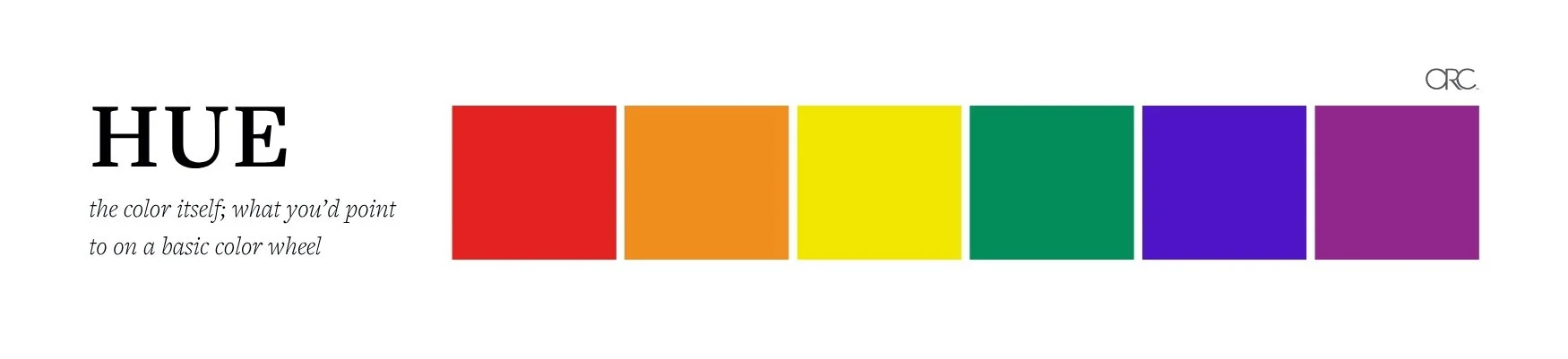
Hue: The color itself
Hue is simply the base color: red, blue, yellow, green, purple. It’s what you’d point to on a basic color wheel.
The reason this word is useful is specificity. When you say “I need a hue closer to purple rather than red,” you’re not talking about how bright or dark something is, you’re just talking about the actual color family.
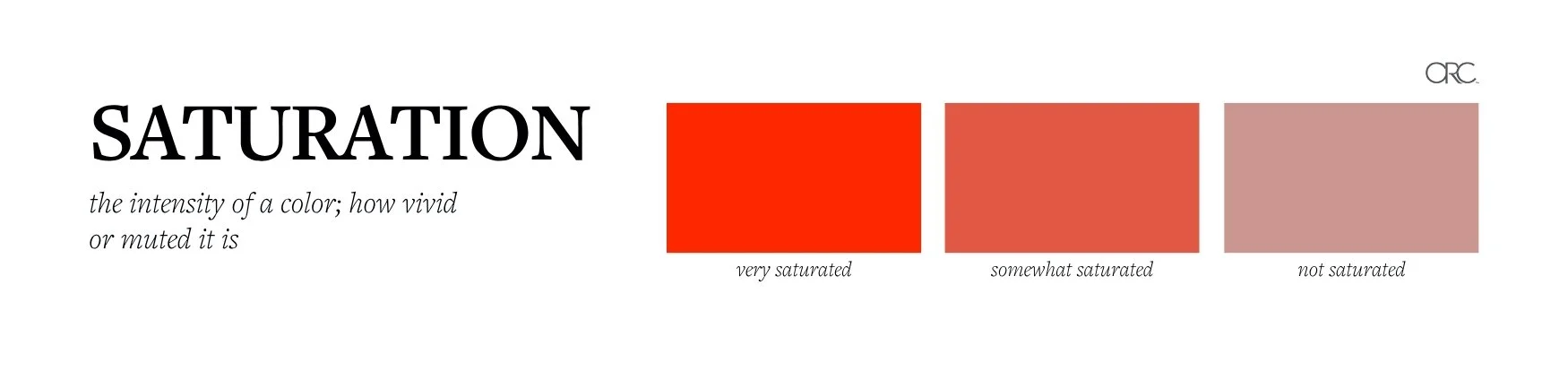
Saturation: How vivid or muted it is
Saturation describes the intensity of a color, measured on a spectrum from pure and vibrant at 100% down to flat gray at 0%. A fully saturated red is stop-sign, fire-engine red. Drop the saturation, and you move toward a dusty, muted, almost weathered version of that same red.
If hue tells you what color something is, saturation tells you how much of that color is actually showing up.
When you’re working with a designer, photographer, or even a paint professional, being able to say “I want something highly saturated” or “can we pull the saturation back a bit?” immediately tells them what they need to know.

Value: How light or dark it is
Value measures where a color falls on the spectrum from black to white, no matter what hue you started with. A pale blue and a navy blue are the same hue, just wildly different values. Keeping values similar creates a cohesive, calming look. Spreading them out creates contrast and drama.
In conversation: "I love this green, but can we go with a slightly lighter value so it doesn't swallow the room?"
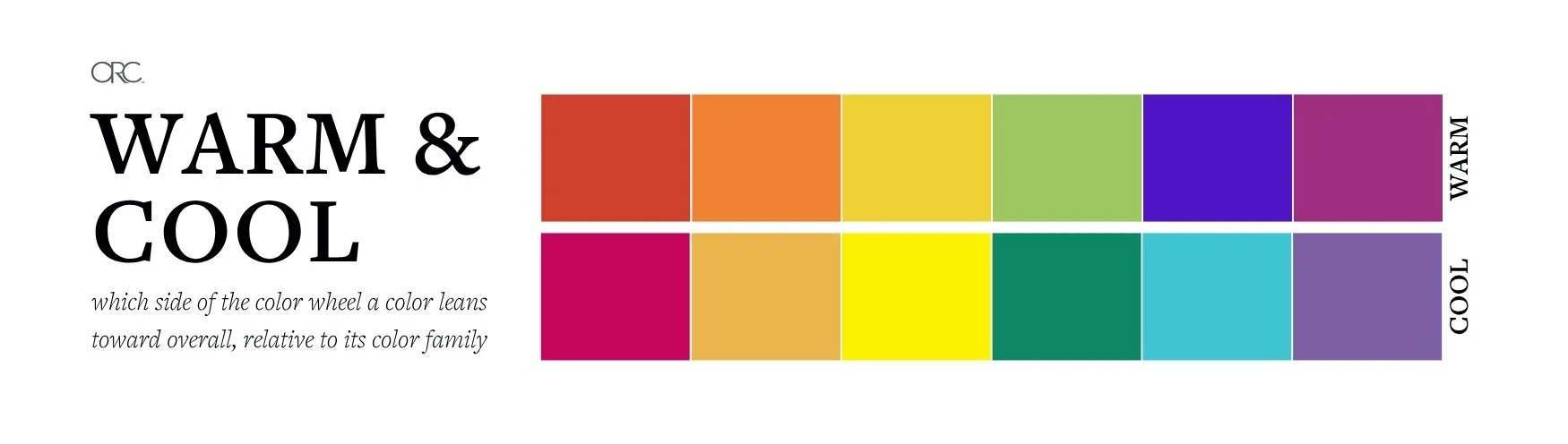
Warm & cool: which side of the color wheel it leans toward, relative to its family
Every color leans either cool or warm. For example, although red is obviously a warm color generally, you can describe reds that lean more orange as warm reds, and reds that lean towards magenta as cool reds.
Temperature is most helpful when comparing different hues within the same color family, like for example if you have a strong preference for cool greens or you’re trying to figure out why two blues don’t look quite right together. Warm tones tend to feel more traditional and welcoming. Cool tones feel more modern and calm. Neither is right or wrong, it's just a matter of the mood you're going for.
In conversation: "I like this color, but can we look at a warmer version? This one feels a little too cold for the space."
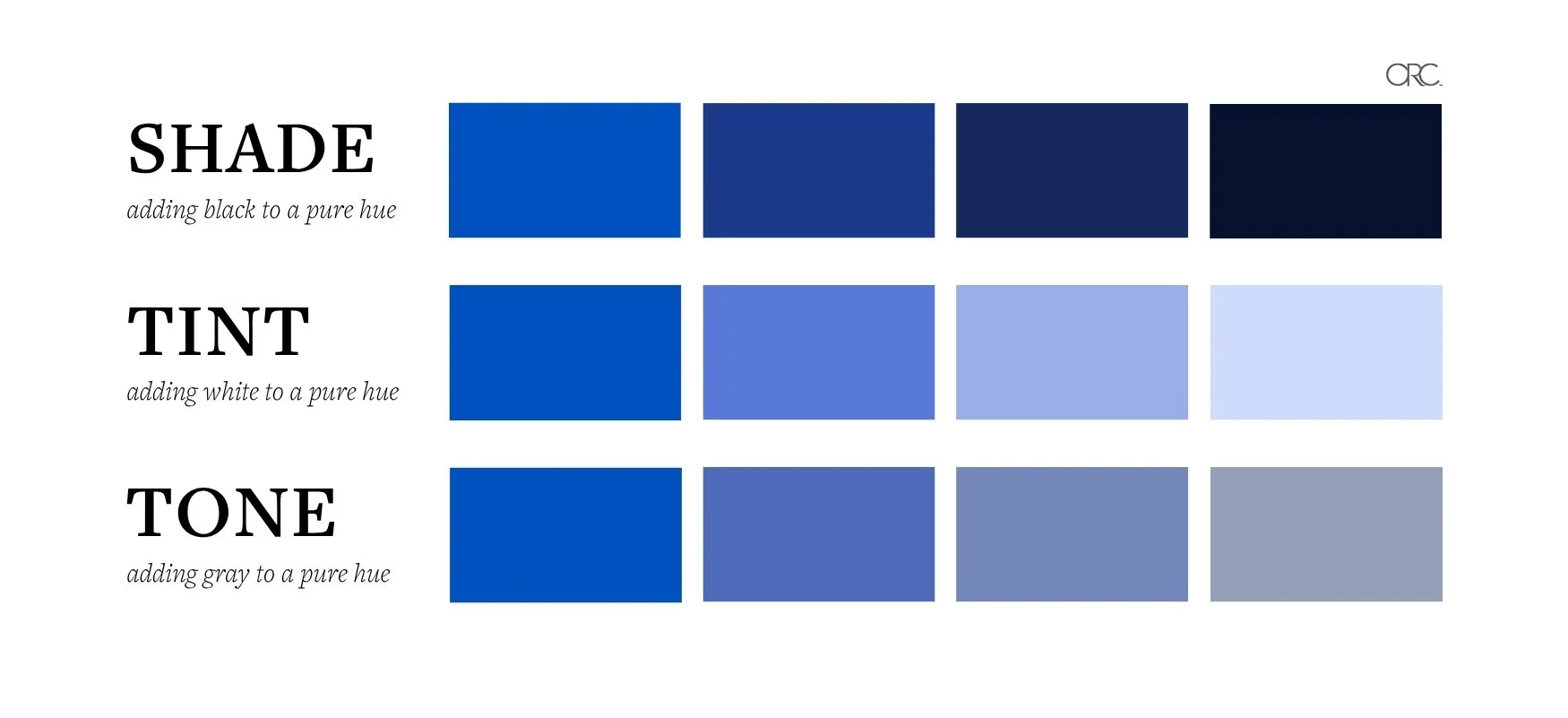
Shade, Tint, and Tone: The three ways to modify a color
Once you’ve landed on a hue you love, you might find you want a variation of it, i.e. something lighter, darker, or more muted. Shade, tint, and tone are probably the most commonly confused in all of color vocabulary, which isn’t surprising, since they all describe a version of a color, just arrived at in different ways. The difference is simply what you’re mixing in.
Shade: adding black to a pure color
Navy is a shade of blue. Burgundy is a shade of red. Forest green is a shade of green. Shades tend to feel richer, moodier, and more dramatic than their base color, which is exactly why they work so well as accent colors or in cozy spaces.
Tint: adding white to a pure color
The result is something more pastel, more airy, more delicate. A tint of red gives you pink. A tint of blue gives you sky blue or baby blue. A tint of forest green gives you that soft sage that’s been absolutely everywhere lately.
Tone: adding gray to a pure color
The more gray you add, the quieter and more subtle the result, without making it lighter or darker, just more complex. Tones tend to feel sophisticated and livable, which is why so many beloved paint colors aren’t quite “blue” or “green”, they’re tones of those colors, softened into something more nuanced.
These five color concepts give you the vocabulary to turn unproductive conversations into constructive ones, and they give whoever you’re working with a clear target. It’s a genuinely useful tool that will save you time, money, and the particular misery of going through sample after sample.
Color conversations are everywhere in home design, be it painters, interior designers, tile suppliers, fabric vendors, or the friend you’ve roped into helping you choose between seventeen shades of white. The faster you can communicate what you’re seeing in your head, the faster you get results you actually love.